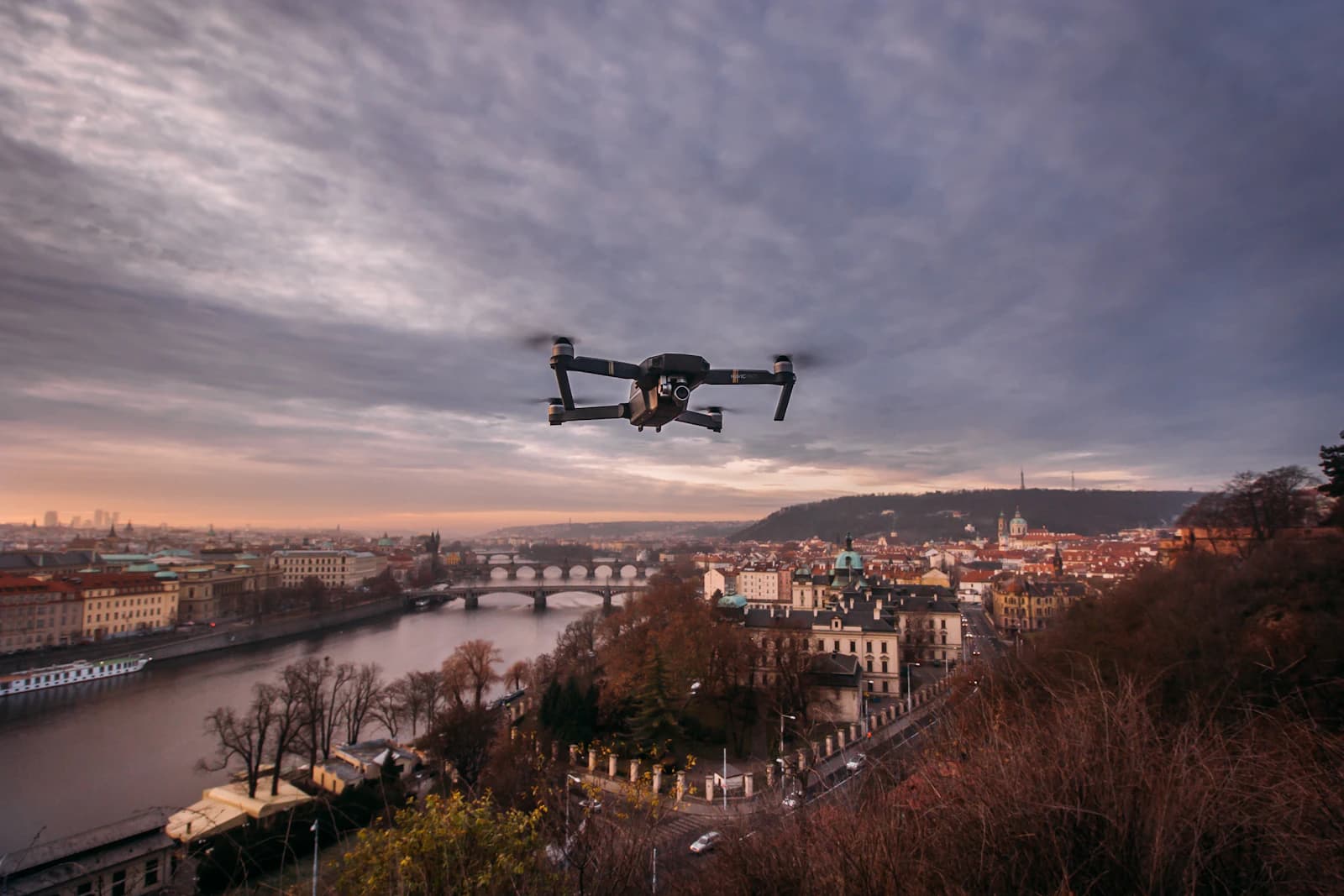
A quiet Kp reading at launch doesn't mean the same thing for a 4 km pipeline survey that it means for a five-minute hover over your backyard. Distance is exactly where geomagnetic disturbance does the most damage: it eats into GPS accuracy and return-to-home reliability, and those are the two systems a long-range mission depends on most.
Why distance changes the risk math
On a short local flight, a pilot who notices the drone drifting in GPS mode can simply look up, switch to manual, and correct it in seconds. At 3-5 km out — or on any BVLOS mission where the drone is out of sight entirely — that option disappears. The pilot is flying on telemetry and a video feed that already has its own latency, and the only "eyes" the aircraft has are the same GPS and compass systems a geomagnetic storm degrades. There is no visual backstop, so a small position error at launch becomes a real problem by the time it's noticed.
Kp thresholds for long-range missions
- Kp 0-2: Ideal. Plan and fly long-range or mapping missions without extra restriction.
- Kp 3: Generally fine, but check the forecast trend, not just the current reading — a Kp of 3 that's forecast to climb during your flight window is a different situation than a stable Kp of 3.
- Kp 4: Acceptable for short-range or near-VLOS flights. For BVLOS or multi-kilometer missions, treat it as marginal — shorten the range or add a wider return-path buffer.
- Kp 5 or higher (G1+): Postpone BVLOS and long-range missions. This is the exact threshold where GPS position-hold and RTH accuracy start to degrade, and it happens to be the moment your drone is farthest from home and least able to compensate manually.
A scenario: when the storm arrives mid-flight
A coastal mapping operator launches a 4.2 km grid survey at 9 a.m. with Kp reading 2 and no storm watch in the morning bulletin. By early afternoon, a coronal mass ejection that NOAA's forecast had flagged as a 40% chance arrives ahead of the wider window, and Kp climbs to 6 within a single 3-hour reporting period. The drone's automated RTH engages on schedule but tracks roughly 100 meters off the planned return line before the pilot notices the live telemetry map disagreeing with the expected path — enough to matter near the shoreline structures the survey was mapping in the first place. Nothing failed; the aircraft did exactly what degraded GPS accuracy predicts it will do.
The common mistake: checking Kp only once, at launch
Kp is reported in 3-hour windows, and a single pre-flight check only tells you the conditions for the window you launched in — not the two or three windows your mission will actually fly through. A multi-hour mapping or inspection flight planned the night before, with Kp checked only at the morning briefing, can fly straight into a storm that arrived in the meantime. Treat a single Kp check the same way you'd treat checking wind speed once and assuming it holds for a four-hour flight: technically compliant, but not actually safe.
A better practice: watch the trend, not just the number
For any mission running longer than one Kp reporting window, pull NOAA's 3-day geomagnetic forecast before you commit to a launch time, and re-check the live value immediately before takeoff even if you reviewed the forecast the night before. Real-time solar wind data from the DSCOVR and ACE satellites, when available through your weather source, can give roughly 30-60 minutes of extra warning before a Kp spike actually registers, which is often enough time to bring a long-range aircraft home before conditions actually degrade.
Practical checklist for long-range flights
- Check the full 3-day Kp/G-scale forecast for your entire mission window, not just the launch-time value.
- If any 3-hour segment during your planned flight is forecast at Kp 5 or higher, reschedule or shorten the mission range.
- Treat forecast Kp 4 as your ceiling for BVLOS or multi-kilometer missions, not Kp 5.
- Build in a return margin: define a distance or time threshold at which you trigger a manual RTH check rather than trusting the automated one blindly.
- Re-check the live Kp reading immediately before launch, even for a mission planned and forecast-checked the night before.